Before you start
Start with fit, not a ranking. Compare the options below, then try the right loft and shaft for your swing.
Updated . Researched equipment guide; not a hands-on product test. Covers models from our original 2025 selection, not a ranking of the latest releases. Our editorial approach.
A driver earns its place in the bag by making your typical tee shot more useful. One spectacular launch-monitor number is less helpful than a pattern you can take to the course. This refreshed guide revisits five models from our original 2025 selection and explains what to compare in a fitting.
Start with the shot you need
Bring your current driver to the fitting. Describe your usual miss, the courses you play and whether you need more carry, a tighter pattern or a more dependable flight. Handicap alone cannot tell you which head, loft or shaft to choose.
The model notes below use manufacturer specifications. The fitting questions are our editorial guidance; they are not results from a Fairway Gear Guide product test. These are established models, not a complete list of the latest releases.
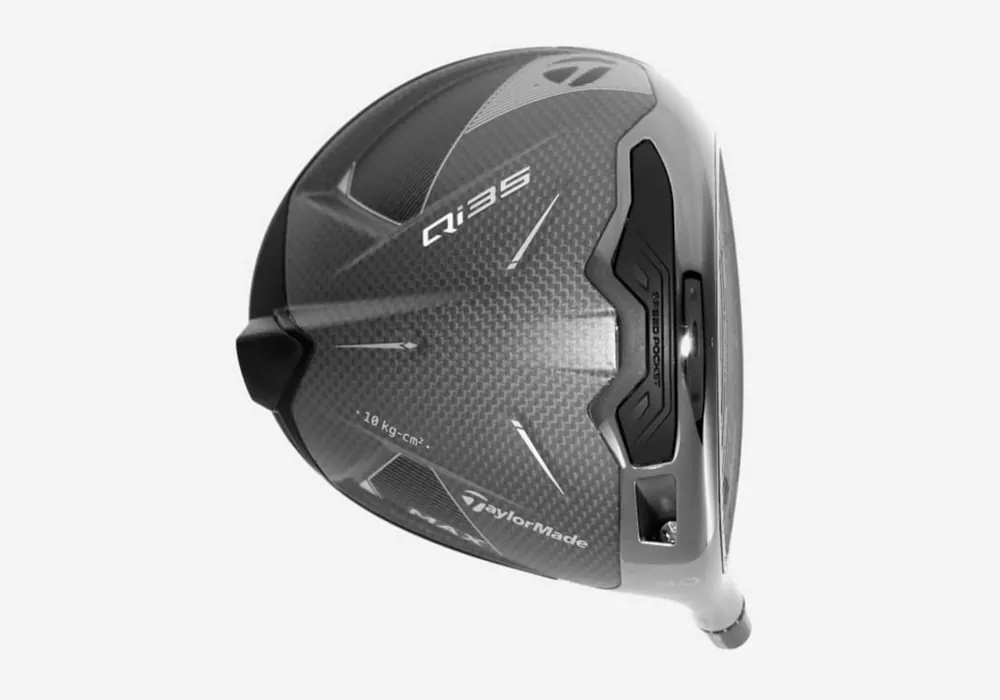
TaylorMade Qi35: compare the weight settings
The standard Qi35 has two movable sole weights, 13 grams and 3 grams, plus an adjustable loft sleeve. That gives a fitter different configurations to compare without changing the head. TaylorMade’s Qi35 design notes explain the construction and weight system.
Fitting question: Does the setting that produces your longest shot also keep your ordinary misses playable? Compare the full shot pattern before choosing a configuration. Record the weight positions so you can reproduce the result.
PING G440 MAX: look at the complete build
PING positions the G440 MAX around forgiveness and offers an adjustable back weight and hosel. Its official specifications also show why shaft choice and playing length belong in the discussion, rather than treating every G440 MAX as the same club.
Fitting question: Can you repeatedly find the center of the face at the proposed playing length? Ask to compare a shorter build if strike location is inconsistent, and judge any change using both carry and dispersion.
Callaway Elyte: choose the right version
The standard Elyte is a 460cc head offered in adjustable 9-, 10.5- and 12-degree lofts, with handedness availability varying by loft. Callaway’s Elyte specification and comparison page distinguishes the standard model from versions designed around different flight and weighting priorities.
Fitting question: Which version addresses your actual ball flight? Try the appropriate alternatives instead of choosing solely from a handicap label or assuming the model used on tour is your best match.
Cobra DS-ADAPT X: make adjustments methodically
The DS-ADAPT X uses Cobra’s FutureFit33 hosel, with 33 loft-and-lie settings. The manufacturer’s model page details its adjustment range and weighting. The range of settings gives a fitter options; it does not identify the right setting for you automatically.
Fitting question: Which adjustment improves your usual miss while preserving useful launch? Change one setting at a time and keep notes. Constantly moving settings between rounds makes comparisons harder.
Titleist GT4: test whether less spin helps
Titleist describes the GT4 as a compact, 430cc driver designed to reduce spin. Its official product guide explains the smaller profile and front-and-back weighting options.
Fitting question: Is excess spin actually costing you distance? Compare carry, flight and the poorer strikes against a less specialized head. A lower spin number is not, by itself, a better outcome.
A better driver comparison
- Establish a baseline. Warm up, then record a representative group with your current driver and the same type of ball.
- Keep the ordinary misses. Note mishits rather than deleting every shot that makes a candidate look worse. Separate device misreads from genuine poor strikes.
- Compare carry and dispersion. Look at typical distance, left-to-right spread, strike location and how often the flight would leave a playable next shot.
- Return to the baseline. Alternate clubs so a better warm-up or fatigue does not decide the winner.
- Confirm the specification. Write down head, loft, shaft, length, grip and adjustment settings. A different build may give a different result.
When to keep your current driver
If a replacement produces only a small change that disappears when you repeat the test, keeping your current driver is a reasonable decision. A fitting adjustment, practice session or lesson may better address the problem you set out to solve. For a used club, inspect condition and confirm the exact specification, return terms and authenticity before buying.
Equipment should solve a problem you can describe. Use these five models as fitting candidates, and let repeatable results decide what stays in the bag.
Before you book, use our driver fitting checklist to prepare and record your final specification.
Explore more gear guides
Back to gear